Maturity Model Part 9.
Transformation, not just change.
When I worked in conservation, landscape-scale transformation was the goal of our group. In regional government, it was operating-model transformation or transforming the resource-management service. Bigger, longer, and harder than simply changing something. We wanted to transform it, and we had to cope with all the complexity and interactions that came with that.
As I pondered these complexities and developed my approach to the maturity model,being focused on transformation gave me time to get to know the work needed to transform. I learned a few things: some surprising, some confirming what I already suspected.
The Slow Road
The first thing I can tell you is that transformation often feels slow.
Day to day, week to week, much of the work doesn’t feel special. It doesn’t feel particularly exciting. It feels normal.
It is a bit like erosion: a river carving a path until, eventually, a canyon is formed. You might not notice much difference from one day to the next. But over time, the landscape changes.
Small gains can accumulate into a substantial difference, and they compound. The important part is that we keep those gains, rather than repeatedly starting again.
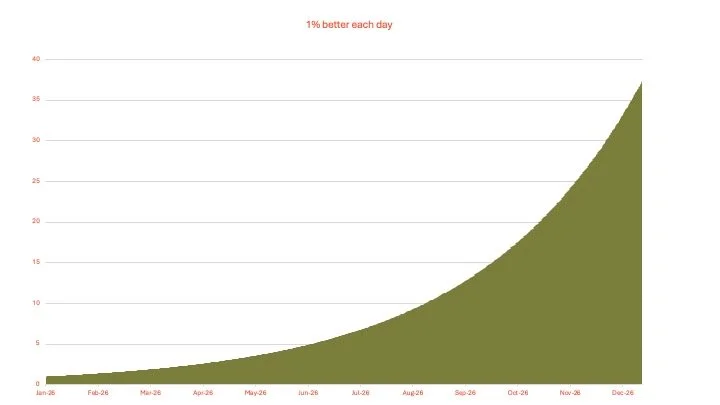
How a daily improvement of 1% compounds over a year.
By transformation, I mean more than delivering a change. I mean changing what an organisation can reliably do—and making that new capability part of normal work.
That takes consistency. It also takes respect for the time needed for new ways of working to become established.
What makes it hard is that, while you are doing the work, it may not feel special. To be honest, I don’t think it always should.
I have also worked on things that felt very different. As part of New Zealand’s all-of-government response to COVID-19, I saw huge numbers of people bring their expertise together in response to a real, clear, and present threat. The work moved quickly. It felt urgent and significant.
That experience leaves me with a useful distinction. An extraordinary response can achieve extraordinary things. But it does not automatically create a way of working that will last after the immediate threat has passed.
For transformation to hold, the work cannot depend indefinitely on urgency, exceptional effort, or everyone putting everything else aside.
When time is one of the resources you have to through at a problem, there is really no substitute.
What makes progress stick?
This is where the maturity model helps me understand transformation.
A change can happen because someone sees a problem and fixes it. A team can develop a better way of working. Both can create real value. But neither automatically changes what the wider organisation can reliably do.
For transformation to hold, progress needs somewhere to live.
At Level 3, it lives in a shared way of working. The process is documented, understood, taught, and used across the relevant parts of the organisation. People do not have to rediscover it every time, and the improvement does not disappear when the person who introduced it moves on.
Level 3 turns a better way of working into the normal way of working. When this starts to happen across multiple parts of your operating model this is where the compounding benefits of the transformation really take hold.
For most parts of most organisations this is where I’d suggest aiming, get things done well, and repeatably. not to mention you will have to get through Level3 to get any further. So it is a solid short term goal regardless.
What Sets you apart?
When I look at an operating model, when there is a strategy for transformation the thing I pay attention to is the handful of things that the organisation can do best, what is ther purpose, there reason for being? these are teh parts of an organisation I suggest aim for Level 5.
At Level 5, something different becomes normal: the work of improving. People have time, responsibility, and support to test ideas, learn from what happens, and embed useful changes. Improvement is no longer an occasional project or the enthusiasm of a few committed people. It is part of how the system operates.
Level 3 makes a shared practice dependable. Level 5 makes the renewal of that practice dependable. and this is whats needed to keep the advantage fresh.
That is why, in my approach, these are two particularly important levels for sustained transformation. One helps the organisation hold on to change. The other helps it keep changing intentionally.
